

Shop Tea Zone Ceylon, Sri Lankan Tea Online | Worldwide Shipping
The history of Ceylon Tea dates back to 1824, when the British brought a tea plant from China to Ceylon (now known as Sri Lanka). The plant was introduced to the Royal Botanical Gardens, Peradeniya, where it was cultivated as an experimental crop and is considered the first non-commercial tea plant grown in Sri Lanka.
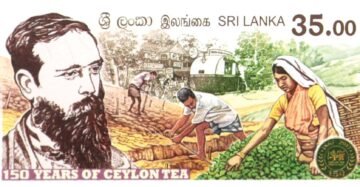
Nearly four decades later, in 1867, James Taylor, a Scottish planter, established the first commercial tea plantation by planting 19 acres of tea at the Loolecondera Estate in Kandy. His pioneering work marked the beginning of Sri Lanka’s tea industry. In 1872, the first sale of Loolecondera tea took place in Kandy, and by 1873, the first shipment of Ceylon tea was exported to London.
These early developments were achieved through continuous experimentation and improvement. Over time, advancements in tea processing machinery and techniques were introduced by various individuals and companies, helping the industry grow steadily.
In 1876, the first tea broking firm, John Brothers & Co., was established. The first public tea auction in Colombo was held in 1883 under the guidance of the Ceylon Chamber of Commerce, which had been founded in 1839. Later, the Colombo Tea Traders’ Association was formed in 1894, followed by the establishment of the Tea Research Institute of Sri Lanka in 1925.
These organizations played a crucial role in strengthening the production, research, and global export of Ceylon Tea during the early stages of the industry.